
Search is no longer just about keywords. When the AI platforms and browsers are not just matching the search words, the business should also understand what is prioritised by these platforms to reach your audience. In 2026, Google and AI models are trying to understand the entities with relationship, context, and authority signals.
If your business is still relying on keyword rankings, you are not even recognised by the current system. It is important to ensure that you are present for the potential customers to find you from the competitors. This is where entity SEO comes into play.
This blog will discuss the role of entity SEO in 2026 and how Google and AI understand your brands, locations, and authority.
What Is Entity SEO?
Entity SEO basically focuses on optimising your brand as a recognised “entity” rather than just a website. You could be a business, brand, person, product, service, or location; all these are considered as entities by the current platforms. Google’s Knowledge Graph and modern AI systems are mapping relationships between these entities and understanding meaning and context.
With entity-based SEO, we will be asking, “Is this brand a trusted entity for the given topic?” instead of just looking to see, “Does this page contain the keyword?”
This might feel like a small change, but actually this shifts everything.
How Google Understands Entities in 2026
Semantic search, natural language processing, and entity mapping will be used by Google in 2026. These are used to determine:
- Who you are
- What you offer
- Where you operate
- How authoritative you are
- How you relate to other entities
Google will build connections between your internet presences, like websites, business listings, social profiles, mentions across the web, reviews, content themes, and even data structure. These are the signals you are giving to the search engine to show that you are consistent, and then Google strengthens its understanding of your entity.
How AI Platforms Interpret Brand Entities
AI tools like ChatGPT, Gemini, and other answer engines rely heavily on entity recognition. They evaluate multiple things to understand your brand.
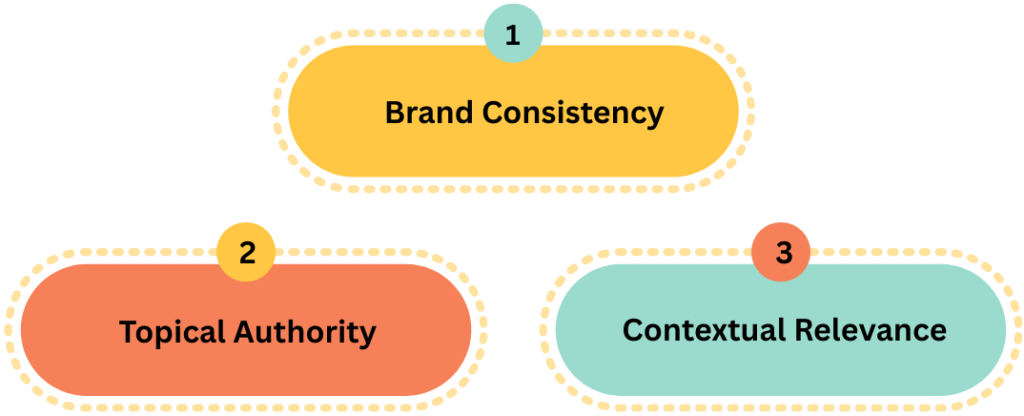
- Brand Consistency
Whether the brand description you have shared is consistent across platforms is checked.
- Topical Authority
The consistency of the content published in the focus subject areas is monitored.
- Contextual Relevance
Your association with specific brands, services, industries, and locations is also analysed.
AI doesn’t just retrieve pages; it usually references entities which it understands and trusts. This is why it is important to give focus to AI search engine optimisation.
Why Entity SEO Matters More Than Keywords
When keywords describe a query, an entity is standing as an identity. It is stronger, more complete, and reliable. When traditional SEO just seeks ‘digital marketing company in UAE’, entity SEO is looking for multiple things like brand name, service expertise, geographic authority, relevance in the industry, and reputation. When your brand becomes strong as an entity, Google does much more than just ranking your pages. It will try to associate your brand directly with the relevant topic. Leading to:
- Knowledge panel visibility
- Higher trust signals
- Better AI recognition
- Increased brand authority
The Role of Location in Entity SEO
Being relevant in the location is important for entity SEO, as Google Maps shows relationships between a brand and its city, service, and industry. If your brand is operating in specific regions, then your entity signals must be reflecting the following.
- Consistent NAP (Name, Address, Phone)
- Location-specific content
- Structured schema markup
- Local authority signals
Without clear geographical signals, your entity becomes weaker in local search and also in the recommendations of AI platforms.
Building Authority Through Entity Signals
Authority in entity-based SEO comes from different parts. We need to know these in order to deliver a proper strategy.
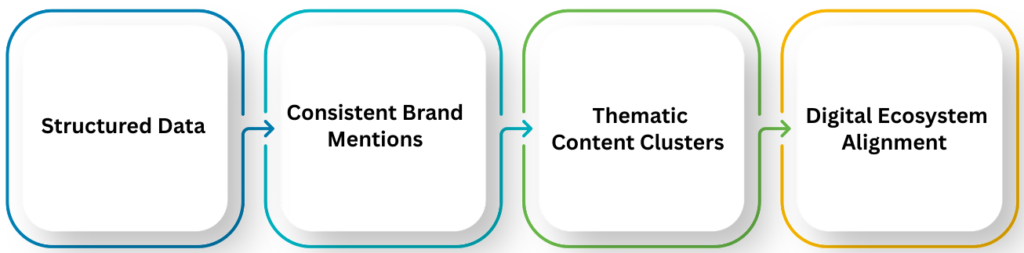
- Structured Data
Schema markup helps search engines define the nature of the organisation, the services provided, information about the founder, location, and reviews.
- Consistent Brand Mentions
Having regular and consistent mentioning across directories, media, and platforms will strengthen the recognition of the entity.
- Thematic Content Clusters
Publishing interconnected content around core topics builds topical depth.
- Digital Ecosystem Alignment
All the content you are publishing on the website, blog, social media, and listing must reflect the same entity narrative.
Entity SEO + AEO: The Strongest Combination
Entity SEO helps search engines recognise your brand. Answer Engine Optimisation (AEO) helps AI platforms extract and reference your content. When combined, your brand becomes identifiable to AI models, structured, and referenceable. This integrated approach is crucial for the brand and businesses in 2026 to go forward.
How PixZent Approaches Entity SEO
At PixZent, we understand the struggle of each business owner to find the right audience. As the market is changing spontaneously, the expert team of Pixzent can become the right partner for your business’s digital journey. We give focus to strengthening your brand identity signals with correct strategies and content with semantic clarity. Aligning your brand to local and global visibility and building brand authority through all digital channels is also carried out at PixZent. Our goal is to give you strong recognition, trust, and AI discoverability.
Conclusion
Now search is evolving and moving towards context, relationships, authority, and entity mapping. When brands build strong entity signals, it will help them in many ways, like appearing more consistently in search results and being recognised by the AI platforms. With an expert like PixZent, you can achieve this and more with ease and generate results.
Connect with PixZent today, and elevate your entity signals effectively!
FAQ
Entity SEO is the practice of optimising a brand so search engines recognise it as a defined, authoritative entity rather than just a keyword-targeting website
Traditional SEO focuses on keywords and rankings, while entity SEO focuses on identity, relationships, authority, and structured signals that help search engines understand a brand.
Search engines and AI platforms rely on entity recognition and semantic search. Without strong entity signals, brands may struggle with visibility and AI-driven recommendations.
Yes. AI platforms rely on entity recognition to determine which brands to reference. Strong entity signals improve AI visibility and credibility.
PixZent builds structured brand authority, aligns digital ecosystems, and integrates SEO and AEO strategies to strengthen entity recognition and long-term visibility.