
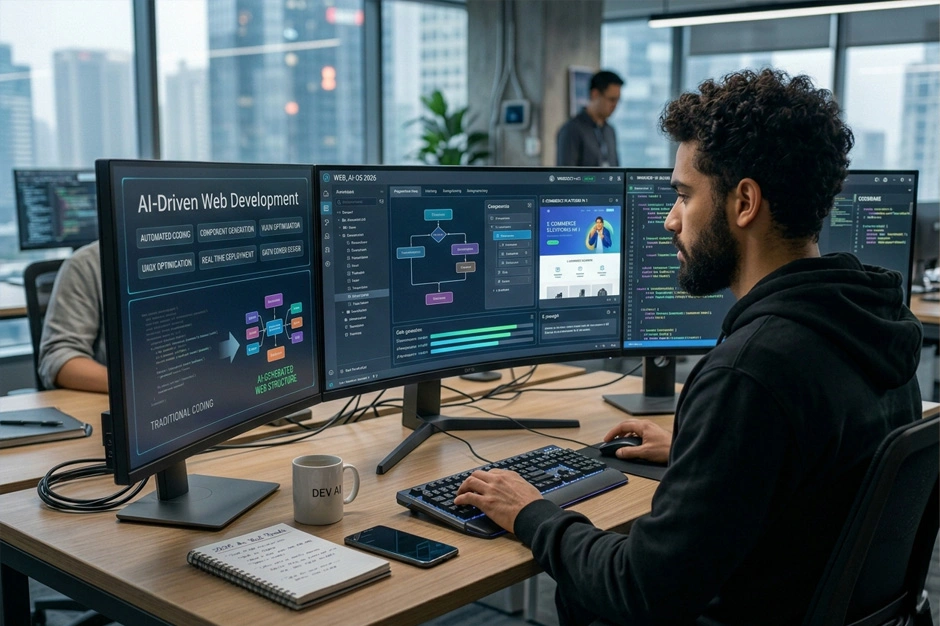
If we are going back 5 years, AI-assisted coding was a new trend everyone was eager about. It was a smart autocomplete and actually a party trick for the developers who have time to spare. But, in 2026, this is completely different. This is currently the backbone of modern web product building.
For the CTOs, startup founders, and tech leaders, this is not something that they could monitor and analyse from a distance. This is a competitive reality that is shaping the decision-making, budgets, and even go-to-market timelines. The question currently is how fast an organisation can adapt to the change that is already happening.
This blog will give you a detailed account of how AI-driven web development is replacing traditional coding.
What “AI-Driven Web Development” Actually Means in 2026
This term is used in many ways, and the proper meaning is lost somewhere. So let’s be precise. AI-driven web development means developing a paradigm where artificial intelligence has a major role in designing, writing, testing, debugging, and deploying web applications.
These modern AI development platforms can:
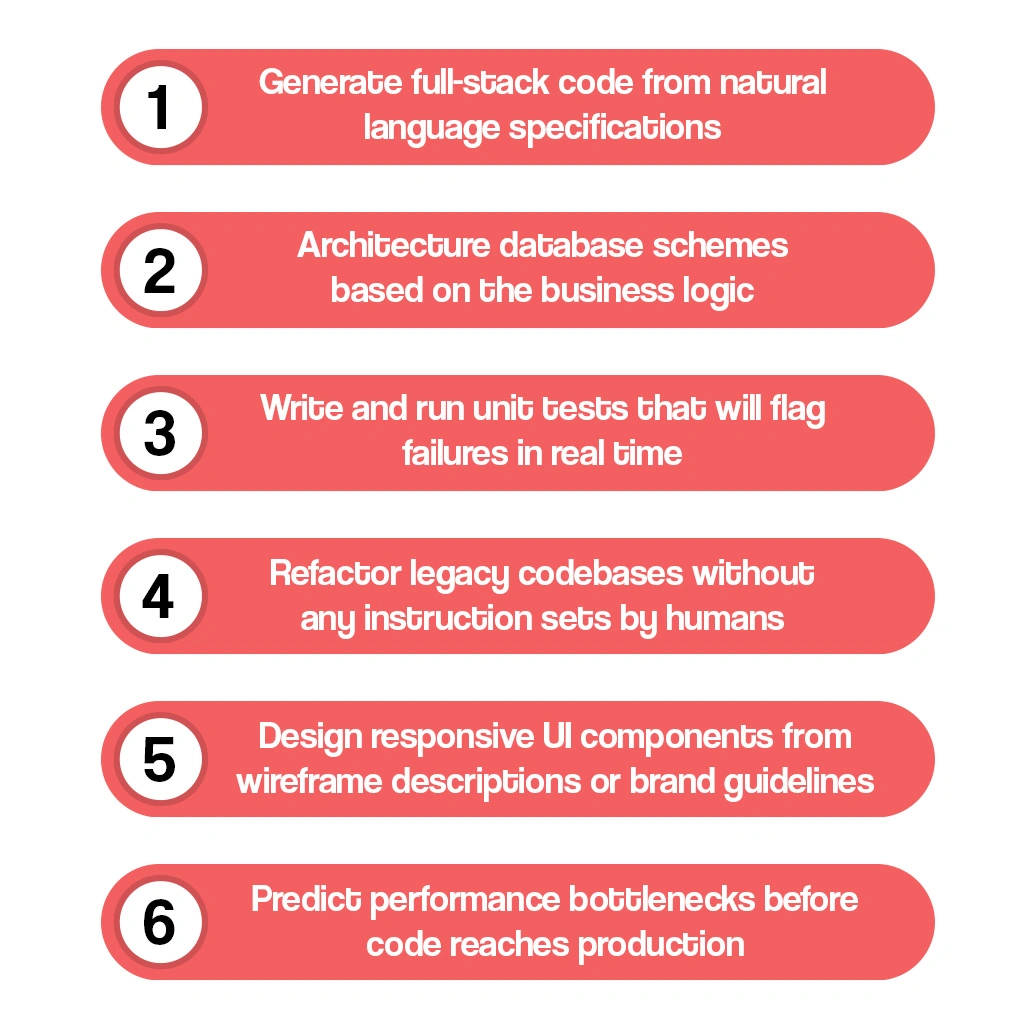
• Generate full-stack code from natural language specifications
• Architecture database schemes based on the business logic
• Write and run unit tests that will flag failures in real time
• Refactor legacy codebases without any instruction sets by humans
• Design responsive UI components from wireframe descriptions or brand guidelines
• Predict performance bottlenecks before code reaches production
When a senior developer took a week to achieve all this in 2022, today it only takes some minutes.
The Numbers Don’t Lie: AI Adoption in Development Is Accelerating
According to industry data, about 70% of enterprise software teams are currently using some form of AI for coding assistance. When it comes to startups, this number is even higher as AI-assisted output is comparatively cheaper. The organisations with smaller capitals and budgets are relying on the AI for their daily workloads.
It should also be noted that the gap in the quality is also causing this. Earlier, AI-generated code used to have many problems like inconsistency, hallucinated dependencies, and poor architectural judgement. Today, the models have evolved and trained on multiple lines of production to produce the best output. They are also tuned to real-world project feedback to pass peer reviews without modifications.
This is good news for CTOs and founders, as the cost of building software has structurally changed. If your team is not adapting to these changes, you will face a compounding disadvantage.
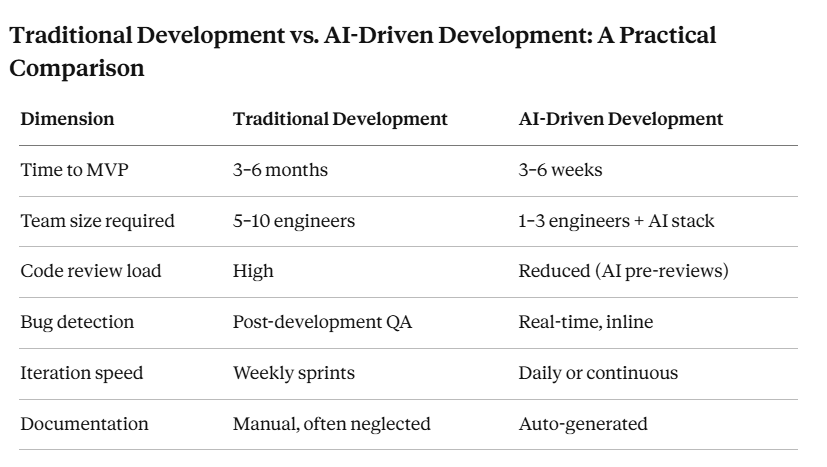
Traditional Development vs AI-Driven Development: A Practical Comparison
This is not an exaggerated or futuristic projection but realistic reports by many startups in 2026.
What AI-Driven Development Does Not Replace
Even if there is a notion that AI will replace the human workforce, especially in web development and web designing services, it is not completely true.
AI-driven website development services will reduce the volume of manual coding like the repetitive scaffolding, the boilerplate, the bug-fixing, and much more. But it will not replace the expertise of engineering judgement. Human expertise is still important to make decisions for system architecture, security, and many more. The role of a developer is not disappearing but evolving. In 2026, the best engineers are the ones who know to direct, validate, and extend AI output. The ones who compete with AI are not doing it the right way.
Key Technologies Driving This Shift
Many website development companies are taking the help of AI-driven web development, and several technologies are helping this shift.
1 .Large Language Models (LLMs) for Code Generation
The models like GitHub Copilot, Cursor, and specialised coding agents have already developed themselves, and now they understand entire codebases beyond just individual functions.
2. Agentic Development Frameworks
In 2026, the AI agents that can function across a task, like pulling necessary requirements, writing code, running tests, and handling failures, will be in the front more than once, simply assisting the developers.
3. AI-Native Design-to-Code Pipelines
The tools that help to translate Figma designs, hand-drawn wireframes, and even verbal cues to front-end codes are now ready for commercial use. This will drastically close the gap between designing and engineering.
4. Intelligent DevOps and Monitoring
AI is also having its part in the post-launching phase. The systems that monitor production behaviour, predict failures, and even propose code patches are now actively helping the developers.
How PixZent is Helping Organisations Navigate This Transition
As a committed website development company, PixZent has always tried to reduce the gap between innovation and business outcomes. We are here to help new start-up founders, technology leaders, and CTOs to help simplify their business processes and effectively implement tools for web designing services. Our team will help you to build AI-native products from scratch that can suit your business. We will help each and every business to properly navigate their AI-driven development as your strategic partner.
Conclusion
The future of coding can never be envisioned without AI in it. In order to be productive and be relevant in the market, every new and old business should be ready to open hands and minds to AI and its tools. Traditional coding and AI-driven web development services should go hand in hand for the best outputs. With PixZent, you can navigate this journey with much more ease with proper guidance and effective strategies.
Get in touch with PixZent for crafting purposeful outcomes!
FAQ
Yes. In 2026, AI coding tools can handle complex codebases with the help of expert engineers who can validate and direct the output.
No. AI is automating the repetitive tasks and mechanical aspects of development, but the role of software engineers to provide architectural judgement, logic interpretation and creative problem-solving will not be replaced by AI.
If you are not monitoring and reviewing AI-generated codes, they can inherit vulnerabilities from training data or produce insecure patterns. A dedicated security review is essential to produce the best results in any AI-driven website development services.
PixZent is one of the names in the AI-driven transformation, and our team is always updating ourselves with the latest innovations and trends in the industry to help our clients to never fall behind in the market.