
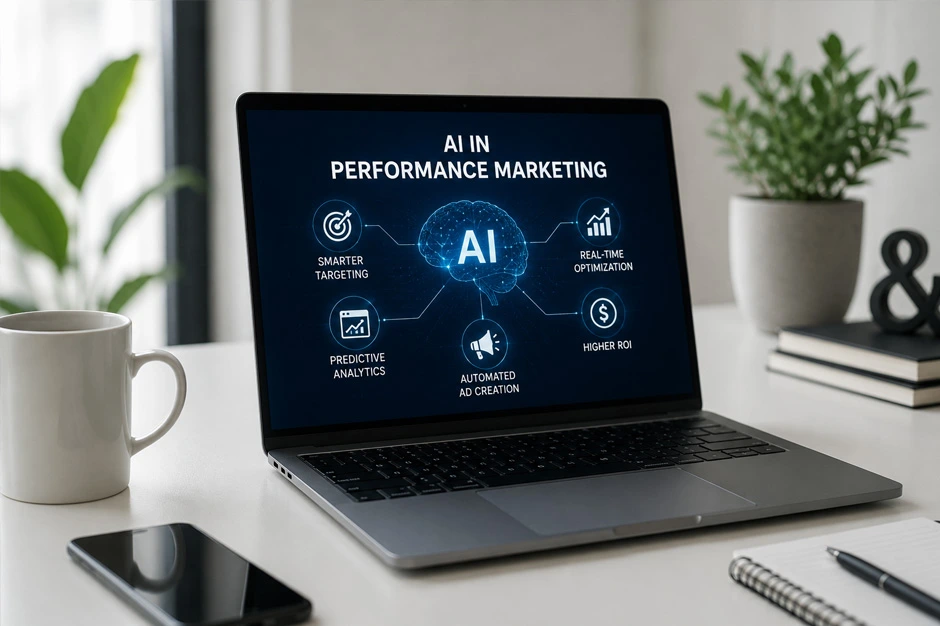
In the 2026 digital landscape, the significance of artificial intelligence (AI) is larger than ever. As we look back into how paid advertising and performance marketing have transformed into this AI-driven ecosystem, it is remarkable. Paid advertising acts as a method while performing marketing as the framework, and these two segments have transformed into a connective layer through AI.
So the question is, how does that make a difference?
The rapid development of machine learning, predictive analytics, and generative media is immense, and now paid ads just perform. In this context, understanding how AI-powered performance marketing operates is a holistic system to drive scalable growth of your business.
Let’s look into how the combination of AI and the right performance marketing services is turning paid ads into a performance-driven machine in 2026.
Paid Ads vs. Performance Marketing in the AI Era
There is this misconception that paid ads and performance marketing are interchangeable, but the reality is that they represent two different growth engines.
Here’s how:
• Paid Advertising: The Vehicle or Method
It is the act of purchasing media space in Google, Meta, LinkedIn, or any programmatic networks for sharing brand messages with the audience.
• Performance Marketing: Strategic Framework
It is an approach to marketing where planning, execution, and payment are connected directly to a measurable outcome. The outcome of this method leads into lead generation, contract confirmation, or booking demos.
Looking back, connecting these two required major human effort, and media buyers spent hours matching creative aspects to connect with audience segments. But in the context of the digital ecosystem in 2026, AI bridges the gap between paid ads and performance marketing.
In this context, when you invest in modern performance marketing services, you will be building into a credible ecosystem where AI uses a paid budget for high-value business outcomes.
The 3 Pillars of AI Transformation in 2026
As AI stepped into paid media, campaigns have taken a major shift and altered into a right and smarter structure, execution, and measurements. This transformation has resulted in 3 major pillar ideas. They are:
- Reactive Targeting to Predictive Audience
There are highly secured private regulations, and AI engines counter this policy on predictive audience modelling. AI analyses real-time behavioural signals, intent data, and first-party CRM inputs to predict who is about to leave you within the next few days.
AI identifies early buying patterns, such as platform reviews and cross-channel searches, and places your paid ad exactly when a buyer is searching for making their purchase.
2. Generative Dynamic Creative Optimisation
Creativity is the variable of success, and now there’s a change in how we produce and test creativity. Instead of creating varieties of ad creatives, marketers are now feeding AI engines a few high-quality videos and design elements.
AI is used to assemble, test, and deploy these hyper-personalised variations simultaneously, making a unique trigger for individuals who interact with it.
3. Autonomous Cross-Platform Budget Allocation
Fixed marketing has changed now. The evolution of AI engines has become holistic and omnichannel. When an automated campaign detects the LinkedIn engagement has dropped and the high-intent searches are spiked, the algorithm shifts budgets instantly. This system delivers a dynamic movement across channels and zero waste in ad spend.
The Components of a Modern Campaign
To deliver an AI-powered performance marketing campaign, you must understand the operational components of the system. It helps to view your marketing strategy in a strategic and balanced setting, where the right outcome is delivered.
The structure is executed through:
• Human Strategy (First-party data)
• AI Optimisation Engine (predictive bidding and dynamic creative)
• Omnichannel Delivery (contextual AI summaries)
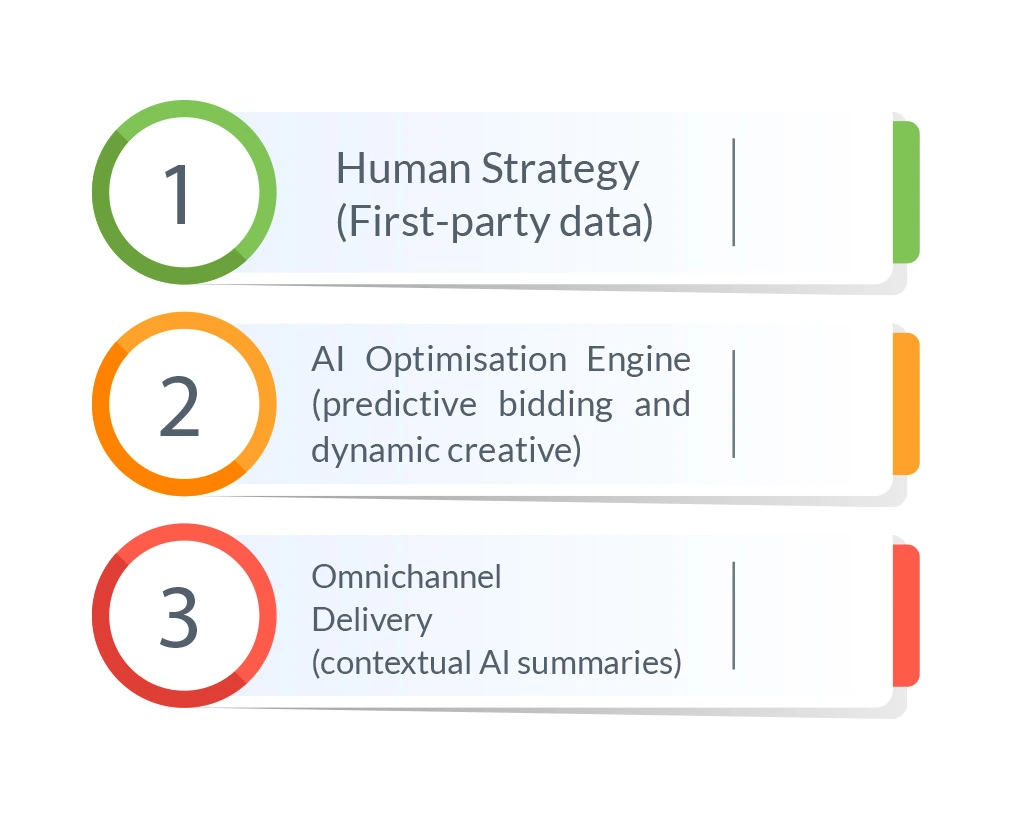
These are the solid factors of a modern campaign. Now, let’s further break down the major four primary components of modern campaigns.
- The Data Feed
This stands as the fuel and includes internal CRM data, customer lifetime value metrics, and offline conversion tracking. This tells the AI what a perfect and reliable customer for your brand looks like and ensures conversion.
2. The Guardrails
This includes human-defined parameters such as budget ceilings, brand exclusion, negative keywords, and strict target KPIs.
3. The Asset Library
Claimed as the palette where synthetic human stories, video testimonials, core brand messaging components, and high fidelity are occupied.
4. The Attribution Engine
Advanced data clean rooms and server-side tracking are occupied, which accurately measures the multi-touch journey of a B2B customer.
Now let’s break down the difference of traditional media buying and the AI-integrated reality of performance marketing and paid ads in 2026:
| Strategic Component | Traditional Paid Advertising Model | 2026 AI-Powered Performance Marketing |
| Building Strategy | Manual bid adjustments (based on keywords) | Real-time predictive bidding (based on individual user intent) |
| Audience Definition | Static demographics and third-party cookies. | Dynamic first-party data matching. |
| Creative Workflow | Manual design of few variations. | Automated asset modularity producing hundreds of real-time iterations. |
| Budget Management | Platform-specific budgets reviewed weekly or monthly | Cross-channel relocation automated by performance velocity. |
| Human Value Focus | Technical execution and campaign setup. | Strategic positioning and storytelling. |
How Businesses Win in this AI Era
The winning of a business is occupied with the usage of AI as a technical tool. To achieve higher scalability for your business, AI-powered performance marketing with reliable prioritising for first-party data, enforcing strategic guardrails, and focusing on the authenticity of creatives are effective.
Here’s a breakdown of each:
• Prioritise First-Party Data: Today public tracking cooking are gone, and a brand’s finest internal data is the essential factor that wins. When you properly feed your CRM data back into your ad platforms, you teach the AI algorithm exactly which leads shift into a winning component.
• Enforce Strict Algorithmic Guardrails: The implementation of strict rules, for example, capping bids on unverified search terms, keep the machine focused on better opportunities. This leads to a scalable and beneficial factor for your business.
• Focus on Creative Authenticity: To ensure true brand growth, human-driven storytelling, raw case studies, and authentic video formats are significant. In this way, the usage of AI to test, scale, and format your creativity makes a reliable message delivery of your brand objectives.
Partnering with a reliable and agile growth agency allows your business to achieve this smarter implementation of AI in paid advertising and performance marketing. This way, your business becomes ensured with a sustainable and high-velocity revenue pipeline.
Take the Next Step with PixZent
As a reliable agency, PixZent navigates your business growth with today’s AI-driven era. The delivery of specialised cutting-edge expertise in performance marketing and paid ads, PixZent offers AI-powered solutions that build the right data infrastructure and framework. By combining predictive targeting and optimisation of first-party data, your business transforms into smarter visibility and sustainable growth.
Contact PixZent and lead to a sustainable digital growth and true brand potential.
FAQs
Yes, the usage of AI in marketing is effective for B2B startups because AI identifies hyper-specific intent patterns that small-budget startups can use for their targeted algorithmic guardrails. AI pinpoints niche buyers into active conversion signals and maximises the cost that has been spent on it.
PixZent combines AI-powered performance marketing strategies that scale your business effectively and accurately. Through advanced machine learning models for predictive audience selection, real-time budget scaling, and creative variance extending, PixZent leads your business into authenticity and profitability.
Dynamic Creative Optimisation, or DCO, is an advertising technology where AI takes media assets, such as headlines, body copy, videos, and images, into an automatic mix and matches them in real-time.
Yes, AI-powered performance marketing is important because AI automates the repetitive technical tasks of media buying into a complete strategy, where accurate data and design deliver the brand message accurately.